

October 2025
After giving this website its most recent facelift, Toon Vandevorst sat down with Ludi for an in-person interview.
This interview has been edited for length and clarity.
TV: Here we are on my backyard patio with Ludi Hinrichs. But let’s pretend we’re on the radio, just to keep this conversation on track. First thing, your concerts and even your CDs are very eclectic: There are different styles of music, and you even recite poetry. For some artists, it becomes kind of a problem to be commercially viable if you don’t limit yourself to a very clear genre, or a very clear gimmick even, and I wondered how that works for you. How is your relationship with your audience? How do you see that?
LH: I have a small, select audience. The same thing that many people up here, who follow their path in the classical music field, seem to have. The audience up here is about 60 to 75 people at any given concert, max. So I just play for them. And it’s built on having a reputation for doing just that: being eclectic. I even recited my grandmother’s poetry at my last concert. I’m kind of known for that now, it’s my “niche”. And commercially, well, at this point in my life, I’m 77, I don’t care about the money.
TV: Yeah, the audience is more important than money. It sounds like your audience is pretty loyal.
LH: They pretty much always show up. It does depend on advertising. And the last concert was really helped by a few things: Paul and Amira Godwin worked together on networking, getting the word out. So that’s number one. And now people know me from Yvon [Dockter]’s Qigong classes that I go to as well. They make an announcement there. Plus I usually do an interview on KVMR.
TV: And so what does your audience expect? They show up for this and they don’t really know what’s going to happen. Is that actually what they’re there for?
LH: In a way, that’s true. As far as I can tell, they want to be surprised. They want to be pushed a little bit. And they want to be read to. I have a soothing radio voice, I’ve been told. That’s why I do the poetry, too. They come for this kind of eclecticism. Sometimes I will play just a didjeridu piece and then at the very end play the large gong that I have. I believe it’s a combination of poetry, music, and healing. Healing frequencies, is how I put it. Weaving all of that together into a concert, people like that. Many people don’t like to have so much constant input, sound-wise. At times I go very quiet, to a silence inside.
TV: So it’s almost like congregation.
LH: You could say that.
TV: Being in the presence of something a little outerworldly, as that one person described it. And to be at peace.
LH: I think that’s a big part of it. Some of them appear to be attracted to contemporary jazz and contemporary classical pieces, other people really just want to hear poetry, and others come for a jazz standard or other well-known piece of music that I always do.
TV: This segues nicely into the the second thing I wanted to talk about. I know you practice Raga [Northern Indian classical music] and you even perform it sometimes in these concerts. For me this has been a very powerful style of music. In a way, it has been transformative for me to be exposed to it and to study it. I am curious about your take: How does it affect how you perform all your other styles of music?
LH: This is how I started taking lessons with Terry Riley: I saw him when he played with a six-or-so-piece group he had at the time at the Don Baggett auditorium. After the concert, I came right up to him and said, ‘I like what I see. I’d really like to meet with you. I remember listening to your music in the ’70s.’ He said, ‘Sure, come on over on Monday.’ And I did. But my question for him that first Monday was, ‘What do you teach?’ ‘Raga,’ he says, ‘it contains everything that I need to know, that I feel a person would want to know for composition, structure, and everything else.’
LH: So after a period of studying it— first of all, for me, that tone— it really sharpened my sense of microtonal intervals, coloration, my appreciation of just intonation. I was into that before, too, when I studied with Canadian composer John Grayson, who introduced me to Terry’s music, but also the music of La Monte Young and Lou Harrison, all of whom I met in person later on, which was pretty phenomenal. John Grayson had a Canadian arts grant to build Harry Partch-style instruments. He built them at a large scale so kids could come and play them in this big barn on the property where I was staying at the time. School kids would come and play on a giant koto that I played as well.
TV: That’s such a great idea!
LH: Yeah. So that introduced me to Terry, La Monte and the others, right after I got out of Berklee School of Music. I left Berklee in June ’70 and I was at John Grayson’s place in Canada by September. That was a key.
TV: But let’s get back to Raga.
LH: So yes, the totally subtle nuances of singing that I had never been exposed to, and the rhythmic and structural nuances and complexity, that really appealed to me. Playing in odd times, playing in 13 and 15, all these other things which I used later on in [my compositions for] Chicken Bonz.
LH: What I really appreciate about this music, its tone, is this: it’s not orchestral music. Pretty much two or three performers, four at the most. But they are really focused on slight, at times subtle, movements that I had never appreciated before.
TV: It creates, even with just the three or four people, a wealth that holds its own compared to orchestral or ensemble music.
LH: And one other thing, the tambura, continuing the field. It’s so grounding. The mothership is what I would call it, you know!
TV: Then did it affect how you teach students, too?
LH: Very much.
TV: Do you practice what you preach and preach what you practice? You don’t have a fixed teaching method that’s different from your own practice? Some of your students are beginners, right? You have young children, you have adults who come to it late.
LH: It’s an improvisatory teaching practice, in a sense. Whoever comes to me, I try my best to decipher how they perceive music and sound. Whether they’re just sonic or more visually oriented. If they want to just read, I’ll then I’ll go with that. The Raga practice used to be a bigger part of what I do when I was actively studying material. I must say it was fresher in my mind then. But one of the key things remains: voice first, then instrument. We don’t have that in this country. People want to just start playing piano.
TV: It sounds like if somebody comes to you and they want to learn jazz, they want to learn jazz piano, right? And they might have a very narrow, very fixed idea about what that is. Do you try to introduce them to this different approach?
LH: You try to get them singing, and you try to get them to hear the song. It’s the same with rhythm. ‘Hey, clap this rhythm.’ (Ludi claps a funky rhythm.) I do a lot of that. I do a lot of ‘Match this note’. So, I think these foundations are so lacking with a lot of teachers. Not all, by any means, but some will start a child with reading music, right off the bat. Well, now that child has no tactile concept. And that’s important. You must feel every one of these notes. And if somebody doesn’t feel the music, what good is it? Terry said that, too, in an interview. He said that the most important thing in music is to put the feeling out and exude that feeling. Raga showed me that too. Even though Raga is at the same time extremely complicated and it can be very…
TV: Daunting?
LH: Daunting, yes. Because, you know… Just pick a Raga, one of my favorites is Multani. To be singing the pitches accurately alone, consistently, is already enough. ‘Komo re. No, I mean, ati komo.’ And so on.
TV: I think I know what you’re talking about.
LH: Yeah, you do. And I’m glad you had that experience with Terry as well.
TV: So here we have the positive influence of your real, deeply grounded practice on everything else that you do, teaching and performing what we might call ‘lighter’ music. It’s a little more trivial sometimes, maybe, but still that feeling is in there, it translates into that. But then I was curious, have you made compromises as a musician? Have you stooped to levels that were too far for you, just a negative experience, so far removed from your actual practice that you had to back away from it?
LH: I’d say in the earlier years, for instance, before and during my school years, playing with some rock bands, doing Rolling Stones tunes, things that I just couldn’t really honestly say were inspiring. Being in and around the drug scene in the late 60s, early 70s in some bands was also one of the negatives. I’ll tell you one story that sort of encapsulates this: When I was at Berklee, I was playing in an eight-piece R&B cover band, and we’re playing in Boston at what they call Sailor Row. It’s the ships that sail in, the whorehouses and everything. The club we played at was, I believe, Louis Lounge. Many of these are mafia owned, and we played six hours a night for a week. There was a go-go dancer in a cage— that’s what they did back then, these are wake-up calls too. After we played six nights, at like 12 or 1 o’clock on Sunday morning, the owner comes up and says, ‘I don’t like what you guys did, there’s the door.’ They stiffed us. I go back to my student ghetto apartment on the sixth floor with no running water, in the cold of winter, and Glenn, the singer of the band, stops by, bringing the go-go dancer. He says, ‘I’m sorry it didn’t work out, but I brought the girl.’ And I was kind of horny, so I thought, ‘Oh well, she might.’ She says, ‘I’m so tired, all I want to do is sleep. Good night.’ She’s going to bed. So yeah, that was kind of the low of the low. (laughter)
LH: A lot of those experiences at Revere Beach and elsewhere in Boston were with what I think was the same band. It’s just felt like my soul was really, really hurting here. My spirit even more. All these great players that went to Berklee, like Ernie Watts, the great tenor sax player, were doing the same gigs. And most of these are mafia owned places, too. And they’d stiff musicians all the time, because there were so many of them. I’d say that was pretty much a low point.
TV: But you got away.
LH: I did. I just quit Berklee School. I saw the competitiveness. You and I have talked about the insane competitiveness in your classical world. Well, jazz musicians are no different! There were cutthroat performers. I just didn’t want to be a part of that. I don’t feel the joy of music that way. So I moved out with a a bunch of yogis to a farm in rural Massachusetts. It was the first step. Then not much later I was living with my sister in Chicago, going to the practice rooms at the music hall to practice, and there I see a bulletin board with an ad for this place in Vancouver Island where I ended up meeting John Grayson.
TV: And you found your path.
LH: Yeah, I found my path. I stumbled upon it, in a way, but I was directed. They said, ‘Come here and stay with us, teach these kids. You can have a full scholarship.’
TV: Well, that ties in really nicely to another question I have. So there is this spiritual but also kind of personal aspect to music. It’s your path, and sometimes it guides you, like you say. You don’t even know exactly what’s happening, but it brings you to where you need to be. What is your take on that? What do you think is the real relationship between music and this kind of numinous, spiritual space? Does music bring us closer to it? Does it make us more aware of it?
LH: Well, I have to sit with that a little bit, but I’d say yes, it does. If I’m sincere in my music writing and offerings, I feel like it’s a request for divine inspiration, which usually can come through. I don’t have too much of a problem having ideas come through if I’m genuinely asking and mostly staying out of the way. Now I will say this: I am very lazy, but I know that it can happen when I’m just sitting down or having a cup of coffee in the morning. An idea pops right in, and to capture that, that’s the connection between music and the spirit, and I really appreciate that and I’ve always felt deeply that music is guided by life. My father named me after [Ludwig van] Beethoven for a reason. It’s been my destiny to follow that musical path.
TV: Do you have any other spiritual practice, or do you feel like this is your spiritual practice?
LH: Both. I feel this is my spiritual practice, yet I’ve had different forms of spiritual practice throughout my life. My father said he was an atheist, and I never believed he really was, because he loved nature so much.
TV: Right. So he had communion, but he just had it in nature.
LH: Yeah, he had an intellectual concept of the spiritual. My mother, on the other hand, went to college at Central Methodist College in Missouri and met Huston Smith. Huston Smith had a big influence on her, because he was one of the first people who wrote about various religions and their similarities in a book called The Religions of Man. That was a standard text in a lot of these colleges and universities. He talks about Buddhism, Christianity, Islam only being one path of many for finding God, and they are more the same than they are different. So around when I was ten or twelve, my mother took me to every type of church, temple, synagogue and ethical society each weekend. One thing that really struck me was the Vedanta Society in St. Louis, where there happened to be guest artists from India performing Kathakali dance and music. I followed that practice for a while, but just like my music now, I go in different directions at times and glean what I feel I can glean.
LH: Recently I had this experience of deep dreaming. I had a vision of Jesus walking down a country road. I asked, ‘Hey, can I walk with you?’ And he said, ‘Sure, come on.’ And in that experience, I felt an emanation from his body like 60,000 volts coming at me, with beautiful colors coming off his body and his beard, and a deep love. That’s all I can say. I chose not to follow orthodox Christianity, Catholicism and the like, but the way of Jesus, the person, the man, who said constantly, ‘the Father and I are one.’ So I’ve been working on my own. I never read the Bible, but now I’m trying to understand.
TV: So you’re reading the red parts, the parts in the King James Version where they put what Jesus might have actually said in red.
LH: See, I didn’t know that, that’s good. What I’m mainly interested in is the Four Gospels, the accounts of what He said or how He acted. I’m what I call a contrarian Christian. I’m not exactly affiliated with a church of any kind, but I appreciate that Jesus energy and truth, and appreciate his contrarian acts: He really upset the Pharisees, and the Romans— He kind of pissed everybody off, but He did that with a real compassion toward humanity, and that’s what I can embrace. I’ve kind of gone full circle from my Christian upbringing through the many religions back to the teachings of Jesus. I really appreciate Jesus, the man, His complete development, and Him saying, ‘you can do better than Me.’
TV: That’s quite the sojourn we made.
LH: Yes, that is. Great word, by the way.
TV: So I want to wrap it up by going back to performance. This is really interesting, and I think it shows a lot about your true inspiration. You’re evidently an inspirational artist. You don’t do anything unless it really means something. I really appreciate that. And I think it’s why you have the loyal audience, too. They just know when they come to a concert, they might not all be equally great, they might be very different from each other, but they know they’re going to get inspired and feel peace. So that’s really great. But to go back to the aspect of the performer, you’re still the performer. You’re still on the stage. They’re still there to see you. I was wondering, do you believe in this idea that there is an audience of one? How they sometimes say that, for performers, there is one central person or one central experience they had in their lives, and that’s who or what they’re performing for. I want to know, do you even believe that? Or do you think it’s too limiting?
LH: I’m not sure if I understand what you’re saying. There’s been several big influences in that light. I would say it’s more than just one as a performer. Chuck Berry, I’ve played with him on stage. And we had a delightful time. And I did the Chuck Shuffle across the stage. And I saw what a ham this guy was. And yet he was actually quite humorous. And he had these crazy songs. But I saw that he also had a deep understanding of the world of performance, and how the white man worked at the time, and how to work within the confines of being a black guy in the world of shysters and everything else and how to work around that.
TV: So do you remember having the thought, ‘I want to be that person’?
LH: No, I didn’t have that with him. But he was one of the first in the genre of performer-entertainer that I saw who effortlessly walked on the stage and did a wonderful performance in his own way.
TV: You told me once that your grandma was a concert pianist. So was there a sense of, ‘Well, we already have a concert pianist, so you don’t need to be that’? Maybe you wanted to show her that you could be that, or maybe it was your parents who wanted their Ludi to be something, too? What I’m asking about is, what gets you out of bed every day to prepare for a performance, not so much ‘Oh, I saw this great performer and that inspired me to also be a performer’. Obviously that’s part of the journey as well for everybody, but the really personal thing: Why it’s important to you and who you’re trying to reach with it, that’s what I want to know.
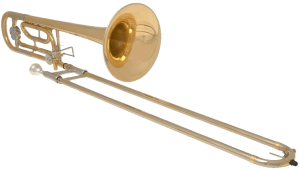
LH: All I can say is, there are multiple facets. One facet is that I was the youngest of five siblings, and my siblings all had their own talents in their own way. So as a young person I wanted to be proficient at what I did. That first manifested in high school as a trombone player. Something in the tone that I can’t quite put my finger on, but an appreciation of a beautiful tone and sound that could be established. After I studied with the first trombonist of the St. Louis Symphony, Bernard Schneider— he was well known, but he was actually a pretty low-key guy— there was something about his sound that made me want to perform like that, so it really is almost literally about finding your voice. Here’s another one: there were two bands out of the ’60s that I really was impressed with. The first Blood, Sweat and Tears group, led by Al Kooper: they were top-notch New York jazz players who also had a beautiful grasp of blues. Lou Soloff was one of the trumpet players, fantastic jazz guy. They had a tune that they wrote for a string ensemble, The Modern Adventures of Plato, Diogenes and Freud. It was one of the finest string arrangements I’d ever heard. Then there was a jazz rock band called The Flock, going way beyond the usual rock standards. I remember going to a concert of theirs and being so impressed with the quality of their musicianship and their humble dedication to music. And I had a sense of composing and arranging in me that just would come out naturally, that I would arrange the horn sections and so forth. And the bands I worked with, like the one with Michael McDonald, I would arrange for the five horns. One night we were going to open for Blood, Sweat and Tears, and they came and I met them and they really liked our group. And so I had this respect for high level musicianship. That’s what I saw. And how can I express this? I don’t know. I was just getting into it, but I really got a sense and an admiration for quality. Although, you know, back then I was also a goofball and still a kid. (laughter)
TV: All of what we’re talking about, like this intuition and this connection to your own path, that there’s meaning to it, and that it’s an offering of you, is interesting to me. It sounds like even when you were just a young goofball and you didn’t know what you were doing and you went from one place to the next, there still was the thing that called to you, the thing you felt an affinity with. And that’s just really nice to see, that you went through all these different styles of music and different experiences and worked with different people, but where you are now as a musician, as a master, basically, at your age, you can have the long view of it and see, ‘Oh, I was actually always headed here.’ And I think that just shows that you trusted your instincts, that you were honest with yourself and you went for the thing that actually appealed to you and not for the easy option. That’s the sense that I get from all the stories. And I think that’s really beautiful. That just shows your integrity as a musician.
LH: Well, thank you.
 Ludi Hinrichs Music
Leave a comment